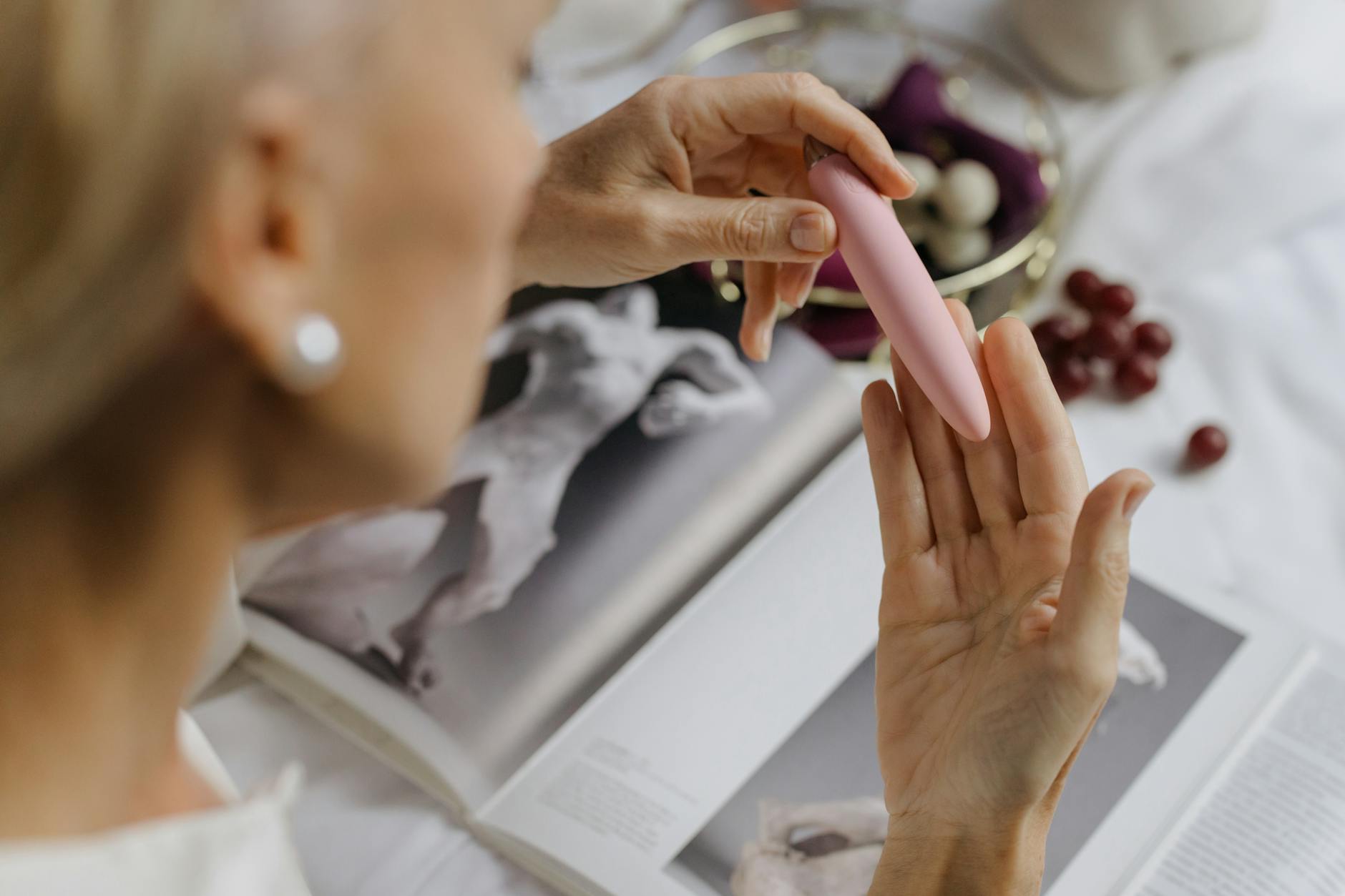
How Lemon Clitoral Vibrators Help When Life Changes Shift Your Pleasure
A job transition, a move, grief, or a relationship shift doesn't just change your calendar. It can disconnect you from your body. Here's what actually happens and how to find your way back.
Let's be real. When you're in the middle of a major life shift, your body stops cooperating. New job, moved cities, relationship status change, loss of a loved one, kids launched. Suddenly the things that felt natural and good feel impossible or confusing or just... gone.
Here's the thing nobody explains clearly: pleasure and safety are linked. Your nervous system needs to feel stable enough to open up to sensation. During major life changes, your brain is running a constant background check of the environment. "Are we safe? Are we okay? What's different?" This hypervigilance is useful for navigating change. It's terrible for arousal.
Additionally, life transitions often come with a secondary loss: ritual. You had a rhythm before. Now that rhythm is gone, and you haven't built a new one. Without routine, pleasure loses its container.
And there's a third layer most people miss. When your attention is fractured across a dozen new demands, reconnecting with your body requires directed, deliberate effort. It won't happen by accident anymore. That feels like failure but it's actually just a sign that you need a different approach.
Here's what's different about clitoral vibrators like those from The Lemon Wand compared to internal vibrators or other methods during life transitions.
Clitoral vibrators work with your nervous system, not against it. They provide direct, consistent stimulation that your brain can track easily. This makes it easier for your mind to settle into sensation instead of jumping between worry and pleasure. It's not magic. It's neurology.
The lemon clitoral vibrator specifically uses suction and pattern variation, which creates a form of stimulation that doesn't require a pre-existing level of arousal to feel good. With traditional vibration, you typically need to be already somewhat turned on for it to feel like pleasure. With suction-based clitoral vibrators, the sensation is novel and engaging from the start.
This matters during transitions because you might not have "arousal" ready to go. You might have disconnection, numbness, or just cognitive load. A lemon vibrator can bridge that gap.
Rebounding from disconnection usually follows a pattern. Understanding where you are helps.
Phase One: Neutral exploration (weeks 1-2). You're just getting reacquainted with sensation. No pressure for pleasure. The goal is to feel what you feel. Start with your clitoral vibrator at the lowest intensity setting, 10-15 minutes, somewhere quiet where you won't be interrupted. You're training your nervous system that pleasure time is safe time.
Phase Two: Sensation mapping (weeks 2-4). Now you're intentionally exploring what feels good. Try different patterns, different intensities, different times of day. Some people find morning sessions easier when their mind is clearer. Others need evening wind-down first. You're rebuilding the knowledge of your own body that stress temporarily erased.
Phase Three: Reintegration (ongoing). Once pleasure starts returning, many people get curious about bringing it back into partnered life, or building it into a new daily ritual. This is also when you might notice different things feel good than before. That's not regression. That's evolution.
A lemon vibrator is a tool, not a solution by itself. The real work is creating time and space.
Block time on your calendar the same way you'd block a meeting. Twenty minutes, once or twice a week minimum. This isn't indulgence. It's nervous system recalibration. Consistency matters more than duration.
Remove distractions. Phone in another room. Door locked. If you have a partner, they should know not to interrupt. This sends a signal to your brain that your pleasure is a priority worth protecting.
Start with zero expectations. Seriously. You're not trying to orgasm or reach a goal. You're just practicing presence with sensation. This removes so much pressure.
If your mind wanders, that's normal. Life transitions make focus hard. When you notice your thoughts drifting, gently bring attention back to how the vibrator feels against your skin. This is a practice. It gets easier.
If you're navigating a life transition with a partner, reconnecting with pleasure can actually deepen how you move through change together.
First, talk about it directly. "I'm having trouble reconnecting with pleasure since everything shifted. I'm going to spend some time with a clitoral vibrator to rebuild my own sensation." You don't need permission, but your partner benefits from knowing what's happening.
Second, consider exploring together as a way to rebuild ritual. Some couples find that incorporating a lemon clitoral vibrator into foreplay helps both people relax into the new version of their lives.
Third, be patient with yourself and each other. Life transitions strain partnerships because everyone's nervous system is activated. Pleasure is often the casualty. Getting it back is a sign things are stabilizing.
How long until things feel normal again? Honestly, it varies. Minor transitions (new job, small move) often see pleasure returning in 4-6 weeks once you rebuild ritual. Major transitions (relocation, grief, relationship shift) can take 3-6 months. Some people report their pleasure actually transforms into something richer.
The clitoral vibrator doesn't speed this timeline exactly. But it does provide consistent, trackable progress. You can feel the difference between week one and week four. That progress itself is often motivating enough to keep showing up.
If pleasure hasn't started returning after 8-12 weeks of consistent practice, consider talking to a therapist, particularly one trained in somatic work or trauma-informed practice. Sometimes disconnection from pleasure signals something deeper about how you're processing change.
Similarly, if pleasure feels numb or accompanied by pain, or if anxiety spikes when you try to reconnect, that's also worth discussing with a professional. These are signals, not failures.
A lemon clitoral vibrator is a genuinely useful tool. But it works best as part of a larger commitment to rebuilding your relationship with your body after disruption.
One thing I notice with clients who rebuild pleasure after life transitions: they often report that what comes back isn't exactly what was there before. It's something different. Sometimes softer. Sometimes more intense. Often more intentional.
This isn't loss. This is evolution. Your nervous system has learned something. Your priorities have shifted. Pleasure gets to shift too.
That's actually the most hopeful part. You're not trying to go backward to who you were before the transition. You're building forward to who you're becoming. Pleasure gets to come with you.
Start with 2-3 times per week, 15-20 minutes per session. Consistency matters more than duration. Your nervous system responds to reliable, predictable touch. Once pleasure starts returning, frequency can increase naturally or stay steady. There's no "right" answer. What matters is that you're creating a sustainable ritual.
Yes. Most medications that affect mood don't prevent pleasure, though they can sometimes delay orgasm or reduce intensity. A clitoral vibrator's direct, consistent stimulation often helps because it gives your nervous system something concrete to focus on. If you're concerned about specific medication interactions, check with your prescriber.
Completely normal. Disconnection can be deep, and one session won't undo weeks or months of it. You're retraining your nervous system to recognize pleasure as safe. This takes time. If you're feeling nothing after 3-4 sessions, try adjusting the intensity, the time of day, or the setting. Sometimes location matters more than you'd expect.
It depends on your relationship and communication style. Some couples find it brings them closer. Some people prefer to keep self-pleasure private. There's no universal right answer. The key is that you're not hiding it out of shame. If you're choosing privacy, it's for privacy. If you're hiding it out of guilt or fear, that's worth exploring separately.
Healing shows up in small, consistent shifts. A sensation that felt numb suddenly feels interesting. A time slot that felt like a chore starts to feel like permission. You notice your mind quieting faster. You catch yourself thinking about pleasure instead of avoiding it. These aren't dramatic. They're gradual. That's actually what healing looks like.
Partially. A lemon vibrator helps you rebuild your own sensation and nervous system stability. That creates a foundation. But if disconnection is rooted in relationship problems, the vibrator alone won't fix the relationship. You'd benefit from both individual pleasure rebuilding and partnered work, potentially with a therapist who specializes in couples.