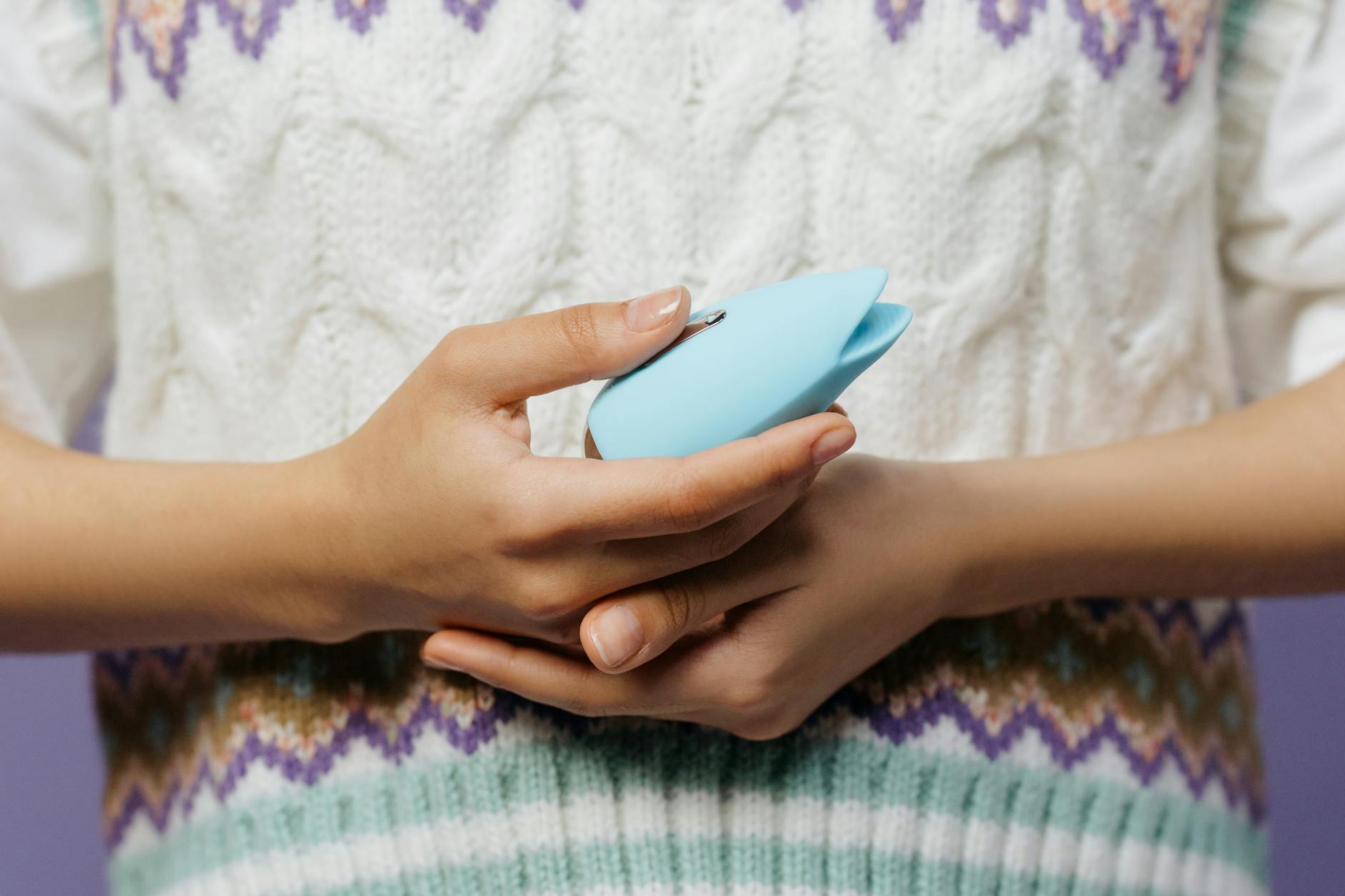
How Lemon Vibrators Help When Sensation Feels Disconnected During Partnered Play
Let's be real. Sometimes when your partner touches you during sex, the sensation just doesn't land. It's not that they're doing it wrong. It's not that you don't want them there. It's more like your nervous system isn't receiving the signal clearly, like someone turned down the volume on pleasure.
This happens way more than anyone talks about. And it's not a relationship problem. It's a nervous system problem.
Why sensation disconnect happens during couples play
Here's the thing: when you're with a partner, your brain is doing about seventeen things at once. You're tracking their pleasure, monitoring your own response, managing the rhythm, staying present, checking in emotionally. That cognitive load literally dampens sensation. It's like trying to hear a conversation at a party when three other conversations are happening around you.
Add stress, work anxiety, or relationship tension to that mix, and your nervous system goes into partial shutdown. Not full shutdown (that would be obvious), but a dimming. Your touch receptors are still firing, but the signal reaches your brain quieter than it should.
Another piece: the touch your partner offers is usually slower, softer, or more varied than what your body needs to feel clearly. If you've spent time solo discovering that you respond better to consistent, direct stimulation, partnered touch might feel too diffuse by comparison. Your partner isn't being gentle for no reason. But if your nervous system craves precision, gentleness reads as faint.
How lemon vibrators change the equation
This is where lemon clitoral vibrators enter the picture. A device like the Lem uses precision suction and pulsation to create a clear, consistent signal that your nervous system actually receives. It's not replacing your partner. It's amplifying your capacity to feel.
When you introduce a lemon vibrator into couples play, several things shift at once. First, you're giving your nervous system a sensation it can grab onto clearly. The pulsing pattern is predictable. The intensity is constant. Your brain gets relief from the work of monitoring and adjusting. Second, you're removing the pressure to "perform" arousal or orgasm on your partner's timeline. The toy handles that load, so you both can relax into presence instead of chasing outcomes.
Third, and this matters for couples specifically, using lemon vibrators together gives you both permission to stop trying so hard. When a partner sees that a toy unlocks sensation that wasn't happening before, something shifts in them too. It's not a failure of their touch. It's a success of understanding what their partner actually needs.
The practical setup that works
Introducing a lemon vibrator to couples play isn't complicated, but timing and framing matter.
Start with a conversation when you're not in bed. Say something like, "I want to feel you more fully during sex, and I've noticed that a specific type of stimulation helps me get there. I'd like to try using a toy together so we're both more present." This reframes the toy from "something's wrong" to "here's how we feel better together."
When you're actually in bed, let the toy create the main sensation. Your partner can touch you elsewhere. Their hand on your inner thigh, their mouth on your neck, their fingers tracing your ribs. The lemon vibrator isn't replacing their intimacy. It's the star performer while they create context.
Start at a lower intensity setting and spend time there. Many couples rush through the initial ramp-up. But when you're introducing a new sensation, your nervous system needs time to settle into it. Five minutes at pattern 1 or 2 matters more than progressing quickly.
What often surprises couples
Most partners report that using lemon clitoral vibrators during sex actually deepens their connection, not weakens it. Here's why: when you're not anxious about sensation or frustrated that your body isn't cooperating, you're actually present with your partner. You can make eye contact. You can kiss them. You can communicate what feels good instead of staying silent and hoping.
The toy also removes a specific kind of resentment that builds quietly in relationships. When someone's been trying to create pleasure for their partner for years and it keeps not quite landing, frustration creeps in. Neither partner names it, but both feel it. Introducing a tool that works shifts that dynamic immediately. Suddenly you're a team again instead of two people on opposite sides of the same problem.
Another surprise: some people discover that using a lemon vibrator together actually makes their desire for partnered touch sharper, not duller. The toy brings them into a state of clear arousal. Then when their partner transitions from the vibrator to touch, the sensation lands completely differently. It's like the toy woke up their nervous system and now regular touch feels incredible.
Conversation land mines to avoid
Here's where couples usually stumble. Don't frame introducing a toy as a solution to your partner's technique. Don't say, "You're not doing it right, so we need this." The moment your partner feels criticized, they go defensive. The toy becomes evidence of failure instead of a tool for connection.
Instead, own your own sensation. "My nervous system responds really well to this specific kind of stimulation" is true and non-blaming. Same with logistics. Don't hide the toy or sneak it into the bedroom. Put it on the nightstand. Name it casually. "I want to use the lemon vibrator with you tonight because I think we'll both feel more connected if I'm actually present instead of trying so hard."
Also avoid the comparison trap. If you've been using lemon vibrators solo and they feel amazing, don't expect the exact same sensation during couples play. The context is different. Your nervous system is in a different state. That's not the toy failing or the situation failing. It's just different, and different can still be excellent.
When to adjust the timing or approach
If introducing the toy feels tense or creates distance instead of connection, pause. This is information, not failure. You might need more conversation first. You might need to use it solo for a while so your partner can observe that it genuinely helps you feel more. Or they might need reassurance that this doesn't mean they're not enough.
Also check: is your partner actually comfortable with toys, or are they going along with it to please you? If it's the latter, all the perfect technique in the world won't make it work. The energy has to be at least somewhat mutual. If your partner needs more time or has concerns, that's legitimate. This isn't about pressuring anyone into something that doesn't feel right.
Some couples find that using lemon vibrators works better at certain points in the cycle. If one partner has been dealing with sensation disconnect, using the vibrator can actually help rebuild neural pathways and sensitivity over time. So the goal isn't always "use it every time." Sometimes it's "use it in a way that trains your nervous system to feel better in general."
The long-term shift that happens
After a few months of using lemon clitoral vibrators together, something changes. Many couples report that sensation reconnects even without the toy. That's because you've both learned something: sensation isn't about pressure or effort or performing correctly. It's about nervous system state, clarity, presence, and permission.
Your partner realizes they don't have to generate all the pleasure single-handedly. You realize you don't have to adjust or accommodate to feel good. The toy was the bridge, but what it really taught you both is how to be together without all that extra work.
That's the real win.
People also ask
Will using a toy during sex make my partner feel replaced?
Not if you frame it correctly. Most partners feel relieved when they learn that sensation disconnect isn't personal. The toy removes a burden that was never theirs to carry alone. The shift usually feels like collaboration, not replacement.
Should I use the lemon vibrator the same way solo and with a partner?
Not necessarily. Solo, you might use higher intensities or specific patterns that work for your solo arousal. With a partner, lower intensities and a focus on steady stimulation often work better because you're managing the additional input of their touch. Let the dynamics be different.
What if my partner is uncomfortable with lemon vibrators or toys in general?
Respect that. No toy is worth your partner's comfort being compromised. Instead, try other approaches: extending foreplay, shifting positions, focusing on specific types of touch your partner can offer. If sensation disconnect is a persistent problem and your partner won't explore solutions together, that might signal a larger relationship conversation that needs to happen.
Can lemon vibrators help if we're also dealing with stress or relationship tension?
Partially. A toy can help sensation feel clearer, but it can't fix unresolved conflict. If there's resentment, avoidance, or real disconnection in the relationship, the toy might feel like a band-aid. Address the relational piece first, then introduce tools for sensation.
Is there a best pattern or intensity to use during couples play?
Start low and consistent. Most people find that patterns in the 1-3 range work best when a partner is also providing touch, because you're getting input from both sources. Let intensity build gradually over time, not within a single session.
How do I bring this up without making it awkward?
Straightforward and kind. "I've noticed that I have a harder time feeling present during sex, and I think a vibrator might help me get there. I'd like to try it together." That's it. No drama, no performance. Your partner will likely appreciate the honesty.
The actual point
Sensation disconnect during partnered play is a communication problem disguised as a sensation problem. You and your partner are working hard, but the signal isn't landing clearly. Lemon vibrators don't fix the relationship. They clarify the signal so you both can relax and actually connect. Once you've felt what clear sensation is like, you both know what you're working toward. That knowledge changes everything.
If you're ready to explore this with your partner, start simple. A conversation, a toy, and genuine curiosity about what happens next. Most couples are surprised by how much shifts.