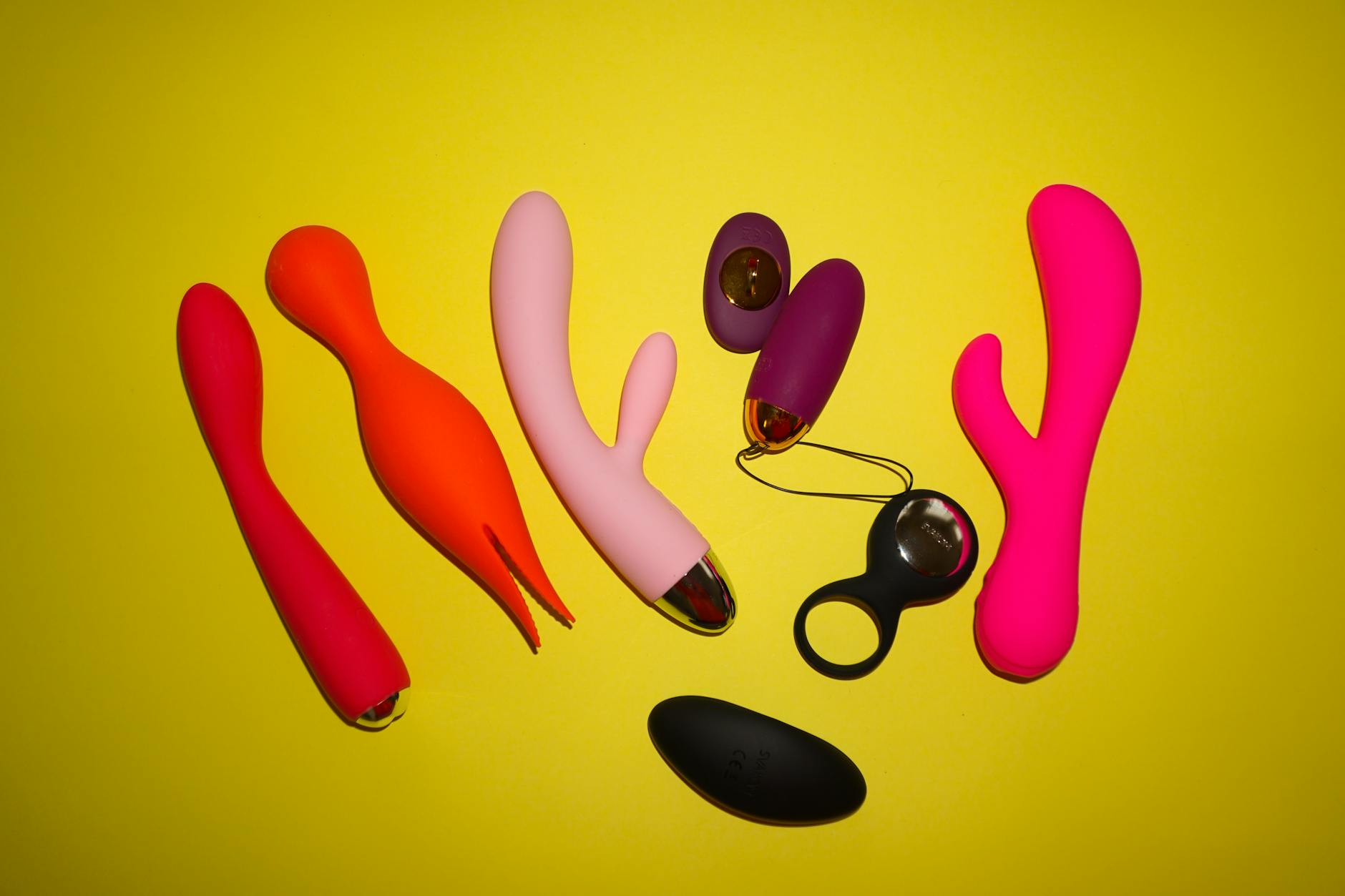
Here's what nobody tells you about bringing toys into partnered sex
You're already having sex with your partner. It's good, it's fine, it works. Then the thought arrives: what if we added a vibrator? And suddenly your brain is spinning through scenarios that feel weird, unnecessary, or threatening to the dynamic you already have. That feeling is completely normal. What's less normal is understanding why you actually feel that way.
Most of the anxiety isn't about the toy itself. It's about the unspoken story you're telling yourself about what the toy means. I want to break that story apart and rebuild it with the truth.
The story you're probably telling yourself (and why it's wrong)
The most common version goes something like this: "If I need a toy during sex, it means my partner isn't enough. It means I'm broken. It means something is wrong with us." Variations include: "He'll think I'm not satisfied," or "She'll worry the toy is replacing her," or "They'll feel inadequate."
Here's what's actually true. A lemon clitoral vibrator during partnered penetrative sex isn't a replacement for your partner. It's a different stimulation happening simultaneously. Your clitoris and your vagina (or rectum) experience pleasure through different nerve pathways. Most people with vulvas can't orgasm from penetration alone without some form of clitoral stimulation. This isn't a personal failure. It's anatomy.
When you add something like a lemon vibrator during sex, you're not saying "I need this instead of you." You're saying "I want both things at once." That's addition, not substitution. And your partner can absolutely feel the difference between those two narratives.
Why lemon clitoral vibrators change the dynamic differently than other toys
There are roughly a million vibrators out there. Most of them are designed for solo play or foreplay. They're powerful, they're intense, they work best when someone is focusing on one sensation for an extended period.
Lemon vibrators, by contrast, use a suction-based pattern that creates rhythmic waves of sensation rather than direct buzzing friction. This matters for partnered sex because:
1. The sensation feels novel, not overwhelming. You're not adding another source of aggressive vibration to an already full body. You're adding a different kind of sensation that doesn't compete with what's happening inside your body.
2. You can stay present with your partner. A lemon vibrator works well with less hands-on adjustment. Once it's in position, you're not fumbling, adjusting, worrying about battery, or losing connection with the person you're with. This keeps the experience connected instead of mechanical.
3. The physical positioning is uncomplicated. The design of a lemon wand means it sits naturally against the clitoris during most positions. You're not performing an awkward gymnastics move or asking your partner to hold something while they're also focusing on their own sensation and connection.
Before you bring it up: what actually needs to happen first
Here's the part most guides miss: introducing a toy into partnered sex isn't just about buying one and bringing it to bed. It's about having a conversation that decouples the toy from your relationship anxiety.
That conversation looks like this. Not: "I want to use a vibrator because you're not enough." Instead: "I read that most people with vulvas need direct clitoral stimulation to orgasm during penetrative sex. I'd like to try something that lets me experience that with you instead of only solo. Would you be interested in exploring that together?"
Notice the difference? One version makes the toy about your partner's adequacy. The other makes it about expanding what you can experience together. One triggers defensiveness. The other opens curiosity.
Your partner might say yes immediately. They might say "I want to research this first" or "Can we talk about what would feel comfortable?" They might feel a little insecure initially, which is fair. That's when you get specific: "I chose this because I want to feel closer to you during sex, not further away. I want us to figure this out."
The first time: what actually happens (and what doesn't)
You've talked about it. You've decided to try. Now what?
First: manage your expectations. This isn't the scene from a movie where everything is suddenly transcendent. The first time using a lemon vibrator during sex with a partner is often awkward, slightly silly, and requires some adjustment. That's completely normal. Treat it as an experiment, not a pass-fail test of your relationship.
Second: pick a position where the vibrator has easy access to your clitoris. Positions where you're facing your partner (spooning, missionary with you on top) work better than positions where your front side is pressed against something else. This isn't complicated. It just requires a small logistical conversation beforehand.
Third: start the vibrator before or just after penetration begins. Don't try to coordinate introducing both at once if this is new territory. Give yourself one variable at a time.
Fourth: communicate in real time, but keep it simple. "Yes, this feels good" or "can you adjust slightly" is enough. Long conversations mid-sex usually kill the mood. Save the deeper debrief for after.
What changes (emotionally, physically, practically)
After the first time, several things typically shift.
Physically, most people report that orgasms feel more accessible during partnered sex. Not guaranteed, not instant, but more achievable than they were without direct clitoral stimulation. This alone changes the dynamic because you're no longer performing pleasure you're not quite feeling. You're experiencing something real.
Emotionally, there's often relief. The anxiety of "will this ruin things" usually dissolves once you realize it doesn't. Most people feel closer to their partner afterward, not further away, because you've done something vulnerable together and it went fine. Sometimes it feels great. Sometimes it's just another thing you tried. Either way, you learned something about yourself and your partner as a team.
Practically, the conversation gets easier. After the first time, you don't need a big speech to suggest using it again. It becomes one of the options available to you, like choosing a position or setting the mood differently.
The actual barriers that might still exist
Sometimes the nervousness isn't just in your head. Sometimes there are real issues worth acknowledging.
If your partner has a history of being dismissive about your pleasure or your sexuality, adding a toy won't fix that. It'll just make the underlying dynamic more visible. In that case, the issue isn't the vibrator. It's the relationship. That's worth exploring with a therapist or counselor before you proceed with toys.
If you're nervous because you have a mismatch in desire or communication in your relationship more broadly, that's also worth addressing first. A lemon clitoral vibrator can be part of rebuilding connection. It's not the foundation of it.
If you've never had an orgasm and you're worried a toy will expose that, I get it. But a toy during partnered sex isn't the time to solve that problem. Start solo, get to know your own body and what works for you, then bring that knowledge into partnered sex. You can read more about this in our guide on how to use lemon vibrators if you've never owned a toy before.
The conversation after the first time
This is where most couples skip ahead and miss the good part.
After you've tried it, have a real conversation. Not a performance review of your partner's technique. A genuine check-in. "What did that feel like for you? Did anything surprise you? Do you want to do it again? What felt good and what felt awkward?"
This conversation is where the real intimacy lives. You're not just having sex. You're learning how to have sex together in a new way. You're building trust around vulnerability and exploration. That's the thing that actually deepens a relationship.
Many couples find that using a lemon vibrator during penetrative sex becomes one of their go-to ways to experience sex. Not every time, but regularly enough that it feels normal. Some couples find it opens doors to other conversations about pleasure that they'd been putting off. Some realize they want to explore other things together. Some just enjoy the direct path to mutual orgasm it creates.
The point is: you don't know until you try. And the trying part is scarier in your imagination than it actually is in reality.
A note on communication as you go
If something feels off during sex, say something. Not afterward, during. "Let me adjust this" or "can we try a different angle" is fine. Your partner wants you to feel good. Assuming they don't is where the real breakdown happens.
If something feels amazing, say that too. People rarely tell their partners what actually works. We hint, we imply, we hope they guess. Be direct. "That combination feels incredible" or "I love when you do that while I use the vibrator" teaches your partner what to repeat.
This is how you move from nervous about toys to actually using them without drama. You treat them like any other part of sex: something you can talk about, adjust, and refine together.
FAQ: Questions people actually ask about lemon vibrators and partnered sex
Will my partner feel threatened if I suggest using a lemon vibrator during sex?
Possibly, if the conversation frames it that way. But if you approach it as "I read that adding clitoral stimulation during penetrative sex helps most people orgasm more easily. I'd like to try that with you," you're inviting them into an experiment, not criticizing them. Most partners feel relieved when they understand their role isn't being replaced. It's actually being enhanced because you're more present and more likely to reach orgasm.
Is it weird to use a vibrator during penetrative sex with a partner?
Not anymore. It's increasingly common, and there's good reason: it makes partnered sex feel better for a lot of people. The only "weird" part is the part you're adding by overthinking it beforehand. After you've actually done it, it usually feels natural.
Can you use a lemon clitoral vibrator if your partner has a penis?
Completely. The vibrator sits against your clitoris while your partner enters you. There's no collision or awkwardness. The only consideration is positioning. You might need to angle things slightly depending on your body and theirs, but that's a normal sex thing, not a toy-specific thing.
What if my partner wants to control the lemon vibrator?
That's up to you. Some people like that because it keeps the sensation of control and attention on the partner. Others find it distracting because you're waiting for them to adjust it instead of adjusting it yourself. This is worth experimenting with. There's no single right answer.
Does using a lemon vibrator during sex mean I can't orgasm without it anymore?
No. Your body doesn't become dependent on vibration. You're not training yourself into a corner. Most people who use vibrators during partnered sex also have orgasms without them. It's just another tool, not your only option.
How do I know if a lemon vibrator is right for penetrative sex specifically?
The design matters. Lemon clitoral vibrators sit flush against your body and don't require constant repositioning. They're quieter and less aggressive than traditional vibrators, which means they work well as part of partnered sex rather than dominating the experience. If you're considering trying something, this is a solid choice.
The nervousness you're feeling about bringing a toy into partnered sex is completely real, but it's also completely survivable. You're not being weird or needy or broken. You're being human. And your partner probably wants you to feel good. That's the conversation worth having.
If you're still building confidence around using toys at all, you might find it helpful to start solo first. That lets you figure out what you like without the added variable of another person. Once you know what works for you, bringing that into partnered sex feels a lot less scary. You can explore more in our guide on how to use lemon vibrators when you're anxious about sensation during solo play.
The point is: you get to figure this out at your own pace. With your partner. Together.