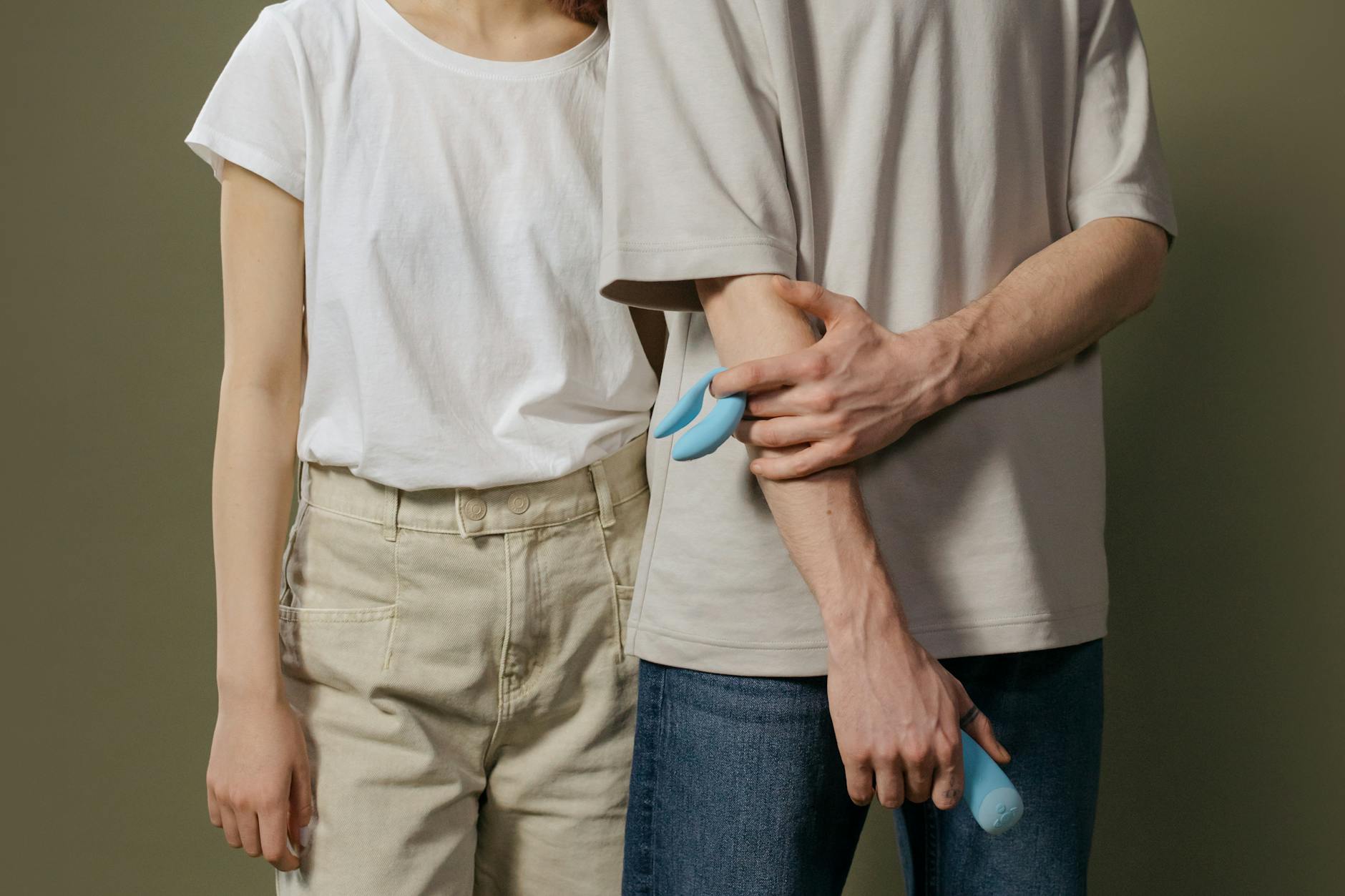
How to Choose Lemon Vibrators If You're Rebuilding Intimacy After Infidelity
Infidelity fractures trust and desire both. Here's how lemon clitoral vibrators can help you reconnect with your body, your boundaries, and your partnership.
Infidelity doesn't just break trust. It shatters your sense of being wanted, desired, and seen. Many people I work with report that after infidelity, their bodies feel like crime scenes. Everything becomes evidence. Touch becomes a minefield. Even solo pleasure feels contaminated.
If you're considering rebuilding your partnership after infidelity, pleasure is not a luxury. It's essential infrastructure. But approaching it requires real intention.
Here's what makes lemon clitoral vibrators useful after infidelity specifically. Infidelity creates hypervigilance. Your nervous system is in threat mode, constantly scanning. Penetration can trigger vulnerability and intrusive thoughts. Partnered sex feels like performing. Your brain keeps asking: am I enough? What was missing?
Lemon vibrators work differently. They're focused, external, and localized. They don't require vulnerability in the same way penetration does. You're not opening anything. You're not depending on someone else's arousal or rhythm. You're not in a position where someone can abandon you.
The suction technology that lemon vibrators use creates a different neural pathway than traditional vibration. It bypasses some of the anxiety response that comes with trust-breaking. And because the sensation is concentrating and intense, it can quiet the intrusive thoughts that often accompany rebuilding.
Don't jump straight to partnered play. Your first job is to prove to your body that pleasure still lives there. That it's not owned by the infidelity narrative. Start alone with a lemon vibrator. The Lemon Clitoral Vibrator works well here because the patterns are straightforward to learn and the intensity ramps smoothly.
Set a time when you know you won't be interrupted. Don't choreograph an atmosphere. Don't perform for an imagined partner. Just explore what your body wants when nobody's watching and nothing is at stake.
Many people find that the first few sessions are more about reclaiming the space than achieving orgasm. You're basically telling your nervous system: this is mine again.
Stage two. Reintroduction with communication (weeks 5-8).
Once you've had a few solo sessions, you and your partner can talk about using a lemon vibrator together. And I mean actually talk. Not during sex. Over tea. With specificity.
Say things like: "I want to use a clitoral vibrator together because it helps me feel safe." Not: "I don't want you to touch me." Not: "I need you to stay away." Explain the functional part, not the rejection part.
Then agree on basic ground rules. Will they hold it? Will you? What if you change your mind mid-session? Can either of you say stop without negotiation? Trust rebuilds through a thousand small moments of being heard and respected. Sex is one of them, but it's not the main one.
Stage three. Integrated exploration (weeks 9+).
If stages one and two go well, you and your partner can begin to explore together with the vibrator as part of partnered sex. But not as a solution. As a tool.
The lemon vibrator shouldn't be the thing that "fixes" infidelity. That's too much pressure for a toy and for you. It's just a way to access pleasure without triggering the same vulnerability that the infidelity exploited.
Not all vibrators are created equal for this moment. Here's what matters.
Intensity you can control immediately. After infidelity, surprises are not your friend. A lemon vibrator with clear intensity levels (low, medium, high) lets you stay in control. The Lemon Clitoral Vibrator has distinct patterns that you can test and adjust without fumbling.
A shape that feels empowering, not clinical. You want something that feels like an extension of your pleasure, not a medical device. The lemon shape is designed to feel natural in hand and personal in use. It's a small thing, but aesthetics matter when you're rebuilding trust in your own body.
Quiet operation. After infidelity, privacy and secrecy are complicated. You need to know nobody else can hear what you're doing. The worry itself kills arousal. Lemon vibrators are surprisingly quiet, which means you can use one in a house where others are present without the hypervigilance of volume.
USB rechargeable, not battery-powered. Battery-powered vibrators create little moments of dependence ("oh no, I need new batteries"). That sounds trivial, but when you're rebuilding autonomy, autonomous tools matter.
"Won't using a vibrator make my partner feel replaced?"
Maybe. But only if you frame it that way. If you say, "I want to explore this because it helps me feel safe," most partners understand. If your partner can't handle your pleasure mattering, that's a separate problem that goes beyond whether you use a lemon vibrator. That's a partnership problem.
"Isn't this weird or kinky?"
No. A lemon clitoral vibrator is about as kinky as a vibrating toothbrush. It's a practical tool for accessing a sensation your body is entitled to. Full stop.
"What if I still feel nothing?"
Sometimes numbness after infidelity runs deep. If you're using a vibrator solo for four weeks and still feel completely numb, that's worth talking to a therapist about. Numbness is a symptom. The vibrator isn't supposed to fix it. You are.
Some people get back to partnered pleasure in a few months. Some take a year or more. You don't need to hit benchmarks. You need to move at the pace that actually rebuilds safety in your body and your relationship.
That said, pleasure is not frivolous. It's a sign that you're beginning to trust again. It's a physical vote of confidence in yourself and (maybe) in your partnership. A lemon vibrator can be part of that vote.
Before you buy a lemon vibrator, ask yourself these questions:
Do I want to rebuild this relationship? (Not "should I," but actually want to.) If the answer is no, no vibrator will help.
Do I have access to solo time, even briefly? Rebuilding pleasure requires privacy and choice.
Am I ready to talk to my partner about my needs with specificity? Because that conversation has to happen.
Do I have access to a therapist, either individually or as a couple? Most partnerships that survive infidelity do so because both people got professional support.
If you answered yes to most of those, a lemon vibrator can be a useful tool. If you answered no, that's information too.
Order a lemon clitoral vibrator. Set a time when you're alone. Turn it on. Pay attention to what your body tells you. Not in a goal-oriented way. Just listen. That listening is where rebuilding starts.
Your pleasure matters, regardless of whether your partnership survives infidelity. And your partnership can't heal if you're both pretending desire is optional. A lemon vibrator is a concrete way of saying: my body is still mine. My pleasure still counts. And I'm choosing to explore that.
That's worth unpacking. Is it a boundary about partnered sex specifically? Or a belief that toys somehow diminish them? If it's the latter, that's actually a trust conversation, not a toy conversation. A partner who's rebuilding after infidelity should be deeply interested in your pleasure and safety, not controlling what tools you use when you're alone.
Absolutely. In fact, solo rediscovery is often cleaner when the relationship is ending. You're not navigating anyone else's feelings. You're just reclaiming your own body. That's valuable work regardless of what happens to the partnership.
There's no timeline. For some people, six months. For others, two years. "Normal" also changes. Most people who rebuild after infidelity describe pleasure as different, not worse. More intentional. Less automatic. You might discover you like things you didn't before because you're exploring with real choice rather than habit.
It depends on your relationship structure and agreements. If you've made a commitment to honesty, then yes, tell them. If you're rebuilding and you've agreed to transparency, tell them. But if you're using a vibrator solo in private time that's genuinely yours, you're not obligated to narrate every moment of your solitude. There's a difference between secrecy and privacy.
Stop. That's real information. Your body is telling you something. A lemon vibrator is a tool, not exposure therapy. If pleasure work triggers trauma, work with a trauma-informed therapist before you continue. That's not a sign you're broken. It's a sign you need support.
Maybe. If the real work (therapy, conversation, recommitment) hasn't happened, a vibrator won't fix it. But if you've done the work and pleasure still feels blocked, then yes. A tool for accessing sensation can sometimes help reset a nervous system that's been in protection mode for too long. Use it alongside therapy, not instead of it.