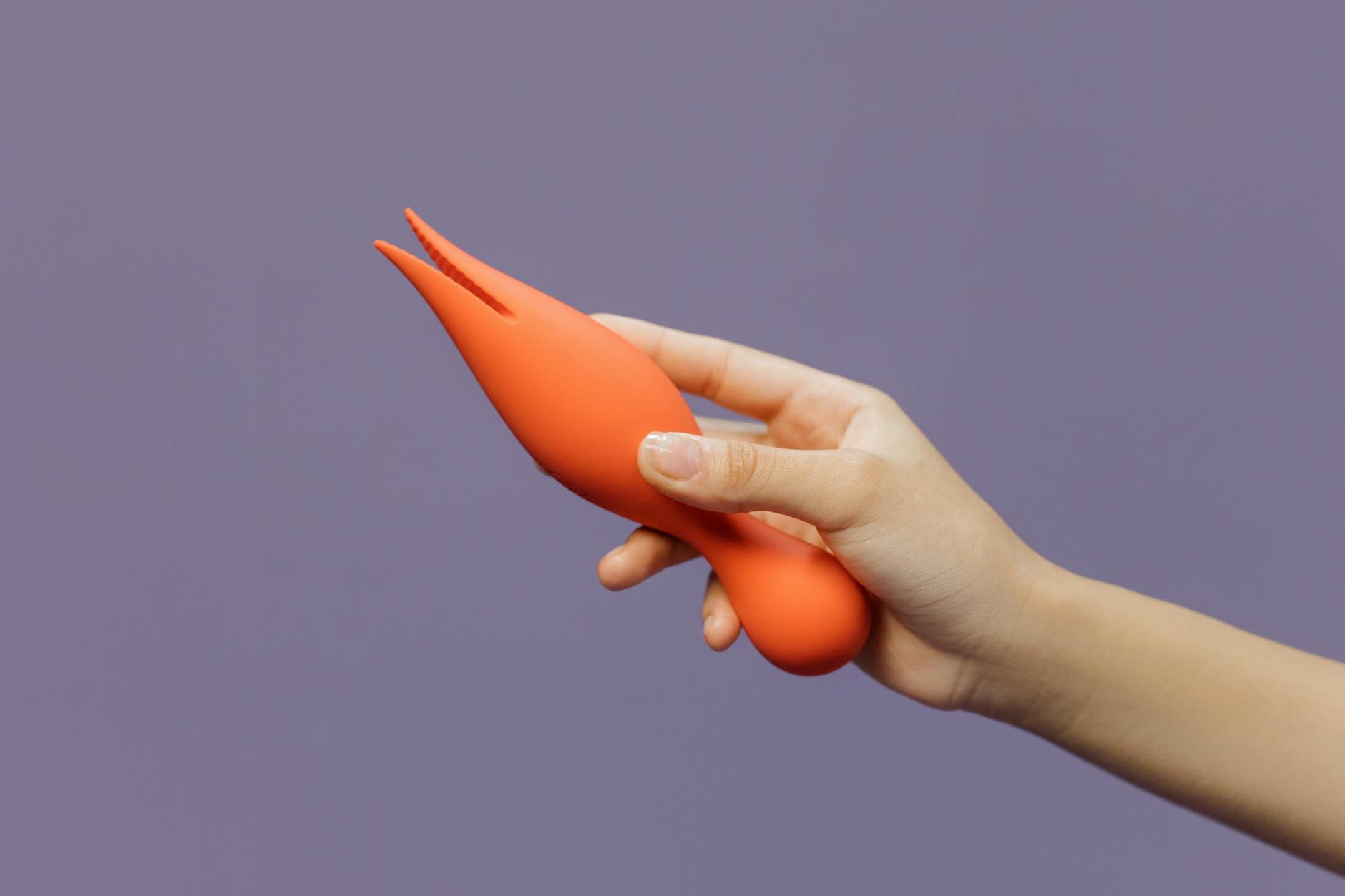
How to Use Lemon Vibrators for Better Results If You're Over 45
Your body changes after 45, but your capacity for pleasure doesn't. Here's exactly how to adapt your technique with lemon clitoral vibrators for the most satisfying experience.
If you're 45 or older, you already know your body isn't operating on the same timeline it did at 25. That's not a loss. It's information. And when you understand what's changing, you can work with your body instead of against it, which is honestly when lemon vibrators and clitoral suction toys become most effective.
Estrogen levels decline gradually starting in your late 30s and accelerate through your 40s and beyond. This changes tissue thickness, natural lubrication, and how quickly arousal builds. Your pelvic floor muscles also lose some elasticity. Blood flow to the clitoris can take longer to peak. None of this means orgasms are off the table. It means the table is set differently.
Traditional vibrators rely on direct friction and speed. Lemon clitoral vibrators use suction and pulsation, which work with your body's slower arousal tempo instead of fighting it. They're gentler on thinner tissue while delivering more consistent stimulation, and they don't require the same intensity to trigger response.
The suction mechanism also means you're not relying on your own lubrication to create comfort. This is huge after 45, when natural lubrication becomes lighter. You get sensation without friction discomfort. For people over 45 dealing with vaginal dryness or sensitivity, this is often the difference between "I used to enjoy this" and "Oh wow, I'd forgotten what that felt like."
One of the biggest mistakes I see is people over 45 using their lemon vibrator at the same intensity they think they "should" be using it. Your clitoris has the same nerve density at 50 as it did at 30. But arousal builds differently. Budget 20 to 30 minutes instead of 10. That's not longer. It's just realistic.
Begin at pattern 1 or 2 on your lemon clitoral vibrator. Let your body warm up. Many people find they can build to higher intensities later in the session, but starting at a medium setting often overshoots the mark and creates numbness instead of pleasure. Low and slow wins here.
After 45, the angle of approach actually changes what you feel. Your clitoris may sit slightly differently as ligaments shift. Some people find direct contact on the glans (the tip) becomes less comfortable and more effective when focused slightly to the side. Others discover they prefer the suction cup positioned against the whole vulva rather than directly on the clitoris.
Spend time experimenting with how you position your lemon vibrator. This isn't a puzzle to solve once. Your body will shift again in five years, and your preferences will shift with it. That's why having a partner's hands free to help guide placement, or taking time alone to explore different angles, is genuinely valuable.
You probably don't need to be told this, but I'll say it anyway: water-based lube with your lemon vibrator isn't about fixing something broken. It's about reducing friction and creating glide. Use it generously. Reapply if things feel dry. Your tissue is thinner now, and lubrication protects it while making sensation clearer. This one change transforms the experience for most people over 45.
Avoid silicone-based lubes if your lemon vibrator is silicone. Silicone breaks down silicone. Water-based works with everything and rinses clean.
Here's what changes: arousal and orgasm stop being one continuous slope. You might need 15 minutes of gentle stimulation before you feel ready for stronger sensation. That warm-up period isn't foreplay failing. It's your body preparing. Some people use a lemon vibrator at pattern 1 or 2 for this phase, just letting arousal build without chasing intensity.
Once your body signals readiness (increased lubrication, sensation changes, breathing shifts), that's when you can introduce higher patterns or more direct contact. The people over 45 with the most satisfying experiences often separate these phases deliberately instead of trying to do it all in one unbroken wave.
After 45, your pelvic floor holds tension differently. It's tighter but also less responsive. This can feel like numbness or distance from sensation, but it's actually protective tension. A few things help: deep breathing before and during use, intentional relaxation (not just Kegels, but the opposite, learning to fully release), and sometimes a vibrator session that's purely exploratory without the goal of orgasm.
If orgasm feels harder to reach, tension in the pelvic floor is often the culprit, not your body's capacity. Addressing the tension usually solves the sensation problem.
If you're using lemon vibrators with a partner, the conversation shifts. At 25, "do you like this" might work. At 45 and beyond, you need detail: "I need more warm-up time now," "Suction feels better than vibration for me," "I want us to focus on sensation rather than orgasm as the goal." How to introduce lemon vibrators to a long-term partner without making it awkward covers this in more depth, but the short version is: your needs are more specific now, and that specificity is what makes things work.
This is the part nobody tells you: pleasure and orgasm are no longer synonymous after 45. You might use your lemon clitoral vibrator, feel genuinely good, experience real arousal and sensation, and never reach orgasm. That session still counted. It still felt good. It still connects you to your body. Some of my clients report their best experiences aren't the ones ending in orgasm. They're the ones where they stopped chasing a goal and just felt.
If you're perimenopausal or menopausal, your hormone levels shift week to week or day to day. Your lemon vibrator might feel amazing on Tuesday and underwhelming on Friday. This isn't user error. It's biology. Some people track these patterns and notice their sensitivity peaks at certain points. Others just accept the variability and use that information to be gentle with themselves on off days.
If you're on hormone replacement therapy, you might notice your sensation changes as your dosage stabilizes. Give yourself a month or two before deciding a technique isn't working. Your body needs time to settle into new hormone levels.
If you're over 45 and experiencing pain during use, that's worth discussing with a gynecologist. Not because something is wrong with you, but because genitourinary syndrome of menopause (GSM) is treatable, often quickly. Topical estrogen, systemic hormone therapy, or other options can transform comfort within weeks. You don't have to white-knuckle through it.
Similarly, if desire has completely flatlined, that's worth investigating. Sometimes it's hormonal. Sometimes it's relational. Usually it's both. A therapist who specializes in midlife relationships can help untangle this. Your pleasure matters at every age, and you deserve support in reclaiming it.
The people over 45 with the most satisfying experiences with lemon vibrators aren't the ones doing everything "right." They're the ones who stopped expecting their bodies to perform like they did at 30. They adjusted expectations, communicated clearly, and gave themselves permission to explore without a finish line in mind. Your body at 45, 55, or 65 is absolutely capable of extraordinary pleasure. It just requires a different map.
Lemon clitoral vibrators use suction and pulsation rather than direct vibration. This works better for bodies over 45 because arousal builds more slowly, tissue is more delicate, and sustained suction provides consistent stimulation without requiring intense friction. Regular vibrators rely on speed and direct contact, which can create numbness or discomfort on more delicate tissue. Suction also doesn't depend on natural lubrication to feel good, which matters when lubrication decreases with age.
Completely normal. Your nervous system's arousal response actually slows slightly after 45 due to lower estrogen and changes in blood flow. This isn't a failure of the vibrator or your body. It's a shift in timing. Most people over 45 need 20 to 30 minutes of stimulation to reach orgasm, compared to maybe 10 to 15 at 25. When you stop fighting that timeline and instead work with it, orgasms often feel deeper and more intense than before.
Not necessarily every time, but probably most times. Natural lubrication decreases gradually after 45, especially if you're perimenopausal or menopausal. Water-based lube reduces friction, protects thinner tissue, and often makes sensation clearer. Some people find they generate enough natural lubrication after 20 to 30 minutes of warm-up, then don't need additional lube. Others always use it. Listen to your body.
Intensity can absolutely stay the same or even increase. Many people over 45 report their most intense orgasms come after this age because they're more focused, less distracted by external pressure, and better at communicating what they need. The clitoris doesn't lose nerve density with age. What changes is arousal speed and sometimes where you prefer stimulation. With the right positioning, timing, and technique, intensity is not off the table at all.
Your body adapts to consistent stimulation, especially with the same intensity and pattern. If sensation feels duller after a few months, try: varying the pattern (don't use the same one every time), taking breaks (skip a few days), starting at a lower intensity to rebuild sensitivity, or changing the angle of contact. Many people also find their preferences shift as hormone levels change. What felt perfect in month one might feel different three months later. That's biology, not a broken vibrator.
Not only okay, but actually valuable. Pleasure and orgasm are separate experiences. A session where you feel genuinely aroused and good, without reaching climax, still counts as intimacy with your body. Some of the most satisfying experiences don't end in orgasm. They end in relaxation, connection, or just feeling alive in your body. Release the goal sometimes. You might find that's when things feel best.
Your body after 45 is not your body at 25. But your capacity for pleasure is absolutely intact. What changes is the timeline, the angle, the warm-up phase, and how you think about the experience. Lemon vibrators work brilliantly at this stage of life because they meet your body where it actually is, not where you think it should be. That's the whole point. Your pleasure matters. It matters right now, and it matters in five years, and in fifteen. Taking the time to learn your body at this age isn't settling. It's the opposite. It's finally investing in your own satisfaction without apology.