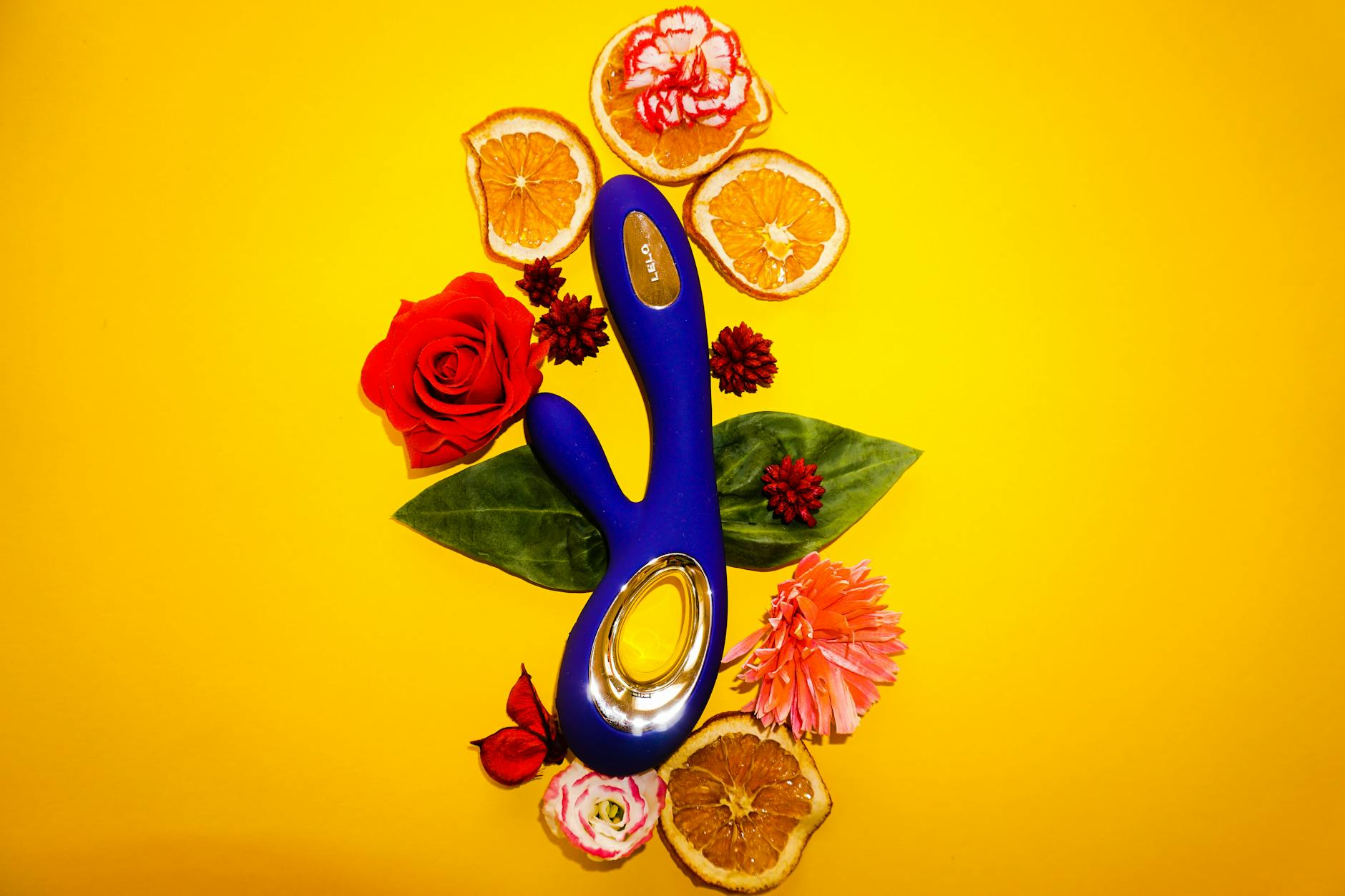
Let's talk about what most people miss with their vibrators
You buy a toy, turn it on, maybe you cycle through a few settings, and then you settle into one pattern that works. Or you don't explore at all and just stick with whatever the default is. Either way, you're leaving sensation on the table. Most people never figure out that a lemon vibrator's real magic isn't in the device itself. It's in the deliberate, curious process of learning how different intensities and patterns actually feel on your body at different moments.
Honestly, this is what separates someone who "uses a toy" from someone who has genuinely transformed their pleasure. The difference is attention.
Why pattern variety matters more than you think
Your nervous system doesn't experience all vibrations the same way. The pattern you love on Monday might feel overwhelming on Thursday. Your arousal level changes the game entirely. A rhythm that feels boring when you're already close to orgasm becomes revelatory when you're building from zero. The intensity that feels perfect during a quick solo session might be too much when you're with a partner and want prolonged sensation.
Lemon vibrators, specifically clitoral suckers like those from The Lemon Wand, typically offer between 4 and 12 distinct patterns and intensity levels. Most people use maybe two of them, ever. That's like having a library and only reading the first chapter of one book.
The pattern taxonomy: what you're actually experiencing
When you press through the settings on a lemon clitoral vibrator, you're moving through three core sensation categories.
Pulse patterns create a rhythmic on-off sensation. These work well when you're building arousal slowly because they give your nervous system a beat to follow. The pattern doesn't overwhelm. It invites.
Wave patterns create a rolling motion through the suction. If pulses are like a heartbeat, waves are like breathing. Many people find waves feel more "natural" because they mimic the way stimulation actually builds in your body during manual exploration. Waves work particularly well mid-arousal, when you're past the initial buildup and want something with a bit more momentum.
Escalation patterns do exactly what the name says. They start at one intensity and climb, or they alternate between two rhythms in a deliberate sequence. These are the patterns you reach for when you're close and want to tip over the edge without having to do anything manually. Let the vibrator do the work. You just stay present.
Knowing which category each of your toy's settings falls into means you can actually choose strategically instead of just stabbing at buttons until something feels good.
How to actually experiment with patterns
Here's the method I recommend to people who want to move beyond random button-pressing.
Pick one time per week when you're unhurried. This isn't about performance. You're gathering data. Set aside 20 minutes. No partner, no pressure, just you and the toy with nowhere to be.
Start at the lowest intensity. Press each button in sequence. Spend 30 seconds on each pattern. Don't judge it yet. Your job is just to notice. Notice the rhythm. Notice where you feel it most intensely. Notice whether it feels sharp or soft.
Rate each one. I use a simple system. Meh, maybe, yes, absolutely yes. You don't need fancy scales. You need honest response.
Go back to your three favourites. Use them for a full 3-5 minutes each. See how they feel when you're actually aroused, not just when you're testing. A pattern that feels boring at 30 seconds might become hypnotic at three minutes. Or it might feel exhausting.
Combine patterns with positioning. Most people don't realise how much angle matters. Directly on the clitoris. Slightly off to one side. Holding it steady versus small movements. The same pattern feels completely different depending on how you're holding the toy. That's information. Collect it.
After three weeks of this kind of attention, you'll have mapped your own pleasure landscape. You'll know which patterns work for arousal building versus getting you over the edge. You'll know which ones feel best when you've been having sex already and your sensitivity is heightened. You'll know which ones you actually want during partnered play.
The intensity arc that actually works
Let's say you have 6-8 intensity levels on your lemon vibrator. The instinct is to go straight to high because "more powerful equals better." That's backwards. Power is just potential. Skill is knowing how to build.
Start at level 1 or 2 for the first 5-10 minutes of solo play. This wakes up your nerve endings without shocking them. You're priming your body to be responsive. At level 2, a subtle wave pattern becomes noticeable. You feel it working. Then move to level 3 or 4. Now you're building real arousal. Stay here for a while. 5-10 minutes. Let your body settle into this rhythm.
Level 5 or 6 is usually where the sensation becomes intense enough to push you forward noticeably. This is often where people want to stay during partnered play because it's powerful enough to feel amazing but not so overwhelming that you lose awareness of your partner.
Levels 7 and above are your "getting me there" settings. These are the high-intensity patterns you reach for in the final push, especially with escalation rhythms that build on themselves.
The arc works because you're meeting your body where it actually is, not where you think it "should be" aroused. Your nervous system has time to adjust. Your pleasure compounds instead of flatlines.
Pattern exploration with a partner
If you're bringing a lemon clitoral vibrator into partnered play, pattern choice becomes a communication tool. A lot of couples mess this up by letting the toy become a distraction instead of a deepener.
Don't hand your partner the toy and say "use whatever." They don't know your body. Talk about it first. "I've been using pattern three and level five during solo play. That's my entry point. Then I usually move to pattern seven for the intensity." This isn't clinical. It's generous information. You're saying, "Here's what I've learned about what works for me."
Then let them explore, but stay present. Tell them what you're feeling. "That pattern feels too sharp right now." "Go back to that one." "Add the next intensity level." You're collaborating instead of him or her guessing.
I've noticed that couples who actually talk through toy settings feel more connected, not less. The toy becomes the excuse for a conversation about pleasure that probably wasn't happening anyway. That conversation rebuilds intimacy that gets lost after years together when you've stopped explicitly asking "what do you actually want right now."
When a pattern stops working and what that means
You'll have a favourite pattern. You'll use it for weeks or months. Then one day it stops hitting the same way. The sensation feels tired. It's not as satisfying. Your first instinct is usually to think "I've broken something" or "I've gotten used to it." Neither is true.
This happens because your nervous system adapts. Neuroplasticity is real. The exact same stimulus stops registering as novel. The brain literally gets bored. It's not a problem. It's a feature. It means you're ready to explore again.
This is the moment to go back to your data. Try pattern two that you rated "maybe" six months ago. You might feel it completely differently now. Your arousal baseline has changed. Your body has changed. The toy hasn't.
Alternatively, try mixing patterns in the same session. Do three minutes on pattern five, then switch to pattern eight. The contrast resets your nervous system. Now both patterns feel novel again. Some couples use this intentionally during partnered play. Switch patterns every few minutes to keep the sensation fresh.
How medication and body changes affect your pattern preferences
If you start medication, change hormonal birth control, or go through hormonal shifts, your pattern preferences often change too. SSRIs can delay arousal, which means you might need longer at lower intensities before escalation patterns become useful. Stopping hormonal birth control can make you more sensitive, which means you might skip levels 7 and 8 entirely and find everything you need at level 5.
These aren't reasons to abandon your toy. They're invitations to re-explore. Your lemon vibrator is adaptable. You just have to pay attention to what you actually feel, not what you felt last year.
I recommend re-mapping your patterns whenever something major shifts. It takes an hour. It gives you new information. You get to fall in love with the toy again in a slightly different way.
FAQ: Your actual questions about patterns and intensities
Should I use the same pattern every time, or should I switch it up?
If something is working for you and you're having great orgasms, don't fix what isn't broken. But most people benefit from rotating between 2-3 patterns depending on their arousal level and mood. If you use the exact same pattern every single session, your nervous system adapts and it becomes less effective. Switching keeps sensation fresh. You don't have to get fancy. Maybe your go-to arousal pattern and your go-to climax pattern. That's enough variety for most people.
How do I know if I'm using too high an intensity?
If the sensation feels sharp, almost painful, or if you feel numb afterward rather than satisfied, you went too high. Real numbness after use means you've overstimulated your nerve endings. That's a sign to dial it back next time. Intensity should feel intense, not brutal. If you need level 8 to feel anything, you might actually benefit from taking a few days off to let your nervous system reset, then starting fresh at lower levels.
Can the lemon clitoral vibrator give me multiple orgasms if I use the right pattern?
Yes, but it's not magic. The pattern is part of it. The bigger part is knowing your own refractory period. Some bodies can go straight from one orgasm to another with the right rhythm. Others need 30 seconds to a few minutes of gentler stimulation before they're ready for intense sensation again. The escalation patterns work well for stacking orgasms because they're designed to push you over without requiring manual adjustment. But you have to learn your own body's rhythm. The toy is just responding to what you create.
What if my partner and I like different patterns and intensities?
This is super common. One person loves waves, the other loves pulses. One person wants level 7, the other peaks at level 4. The answer is flexibility. Use the toy on each other at your individual preferences. When you're using it on yourself during partnered play, you get to pick. When they're using it on you, talk through what you want in the moment. This isn't about him or her doing it "right." It's about you both knowing that sensation is individual and adjustable. That's actually liberating for couples.
How often should I explore new patterns?
If you've been using the same three patterns for six months, probably time to re-explore. If you've tried everything and you've got your favourites locked in, you don't need to keep searching. But I do recommend a full re-mapping every year or so, or anytime something changes in your body or life. New medication, hormonal shift, relationship change, or just a long break from solo play. Your preferences evolve. The toy is flexible enough to evolve with you.
Can the lemon vibrator patterns help if I have a hard time with orgasm?
Maybe. If the barrier is sensation, using the right pattern might help. But if the barrier is mental (anxiety, distraction, performance pressure), the pattern doesn't matter much. The toy won't fix that part. What helps is removing the pressure. How to Use Lemon Vibrators When You're Anxious About Sensation During Solo Play goes deeper into this. Sometimes the pattern is just permission to slow down.
The real skill is paying attention
Lemon vibrators are designed to be simple. Turn it on. Use it. Done. But the people who get the most out of them are the ones who spend a little time actually learning how their own body responds to variation. That's not complicated. It's just deliberate. You're building a relationship with your own sensation, and that translates directly into partnered play too.
When you know what you like and why, you can tell your partner. When you've mapped your own patterns, you're not relying on them to guess. When you understand your own arousal arc, you can guide them through it. That's the skill that actually deepens intimacy. The toy is just the tool. The wisdom is yours.
If you're ready to really commit to exploring your pleasure with intention, how to use lemon vibrators when you're returning to sex after a long break covers rebuilding that connection slowly. Or how lemon vibrators help when foreplay feels rushed or incomplete if the real issue is carving out time for this kind of attention with a partner.
Your pleasure matters enough to understand fully. Start exploring.