
The setup: desire mismatch is normal
Honestly, this is one of the most common conversations I have with couples. One partner is curious about toys. The other feels threatened, inadequate, or just plain uncomfortable. It doesn't mean anything is broken. It means you're two humans with different baseline comfort levels around something intimate.
Here's what makes it tractable: discomfort around toys rarely comes from the toy itself. It comes from what people think the toy means. He thinks it means he's not enough. She thinks it means she's being pushed into something she didn't ask for. Both are operating on stories that have nothing to do with the reality of what a lemon clitoral vibrator actually is.
So we start there. Not with the vibrator. With the story.
Why the hesitant partner is actually the one in control here
This is counterintuitive, but important. The person who is slower to warm up to toys has all the power in this conversation. If you force it, resentment builds. If you drop it entirely, the interested partner feels unseen. The sweet spot is meeting the hesitant partner exactly where they are and letting them set the pace.
I tell couples this: the goal isn't to change anyone's mind. The goal is to make space for curiosity without obligation.
That means the conversation starts with genuine questions, not proposals. "I've been thinking about trying a toy together. I'm curious what that brings up for you" is very different from "I want to buy this and use it on you." One opens a door. The other closes it.
The actual conversation starter
Pick a time that's not during sex or immediately before it. (Bedroom floor is the worst place to have this talk.) Sit down, maybe with tea, and lead with honesty about what you want and why.
"I've been interested in exploring toys together because I think it could be fun for both of us, and I want us to feel good. I'm not saying anything is missing, just that I'm curious." Notice that's free of judgment toward either person's body or desire.
Then listen. If your partner says "that makes me feel inadequate," don't correct them. Sit with it. "Tell me more about that feeling." Often the hesitant partner hasn't said it out loud before, and naming it makes it smaller.
Common concerns I hear:
- "Won't you get bored with me?" (Almost never the case. Toys enhance partner sex; they rarely replace it.)
- "I feel like I'm not enough." (Toys aren't about replacement. They're about variety and different sensations. Your hands do something a toy can't.)
- "I don't know how to use it." (Learned skill. Everyone starts clueless.)
- "It feels clinical." (Fair. That's why we start small and warm.)
After they talk, they need to know your answer to: what happens if we decide not to do this? "Then we don't do this, and I don't bring it up again" is a sentence that dissolves a lot of resistance. You're not attaching your happiness to their agreement.
Building comfort: the gradient approach
Here's the thing about comfort: it almost never jumps. It climbs. Start at the bottom of the ladder, not the top.
Rung one: just talk about it. Read an article together (maybe this one). Watch a couple of sex educators talk about toys on YouTube. No pressure, just normalize the conversation.
Rung two: the hesitant partner holds the toy. "This is The Lem. It's cordless. It's waterproof. It doesn't have a ton of vibration intensity like traditional vibrators do." Let them feel it in their hand. Turn it on. Let them hear it. Familiarity dissolves a lot of the strangeness.
Rung three: use it solo, separately. "I'm going to use this on my own and see how I feel about it." If the hesitant partner knows their partner is exploring independently, without performance pressure, the threat softens. They're not being asked to participate. They're just allowed to witness or ignore.
Rung four: use it during partnered sex, but on your own body first. You're not introducing it as "now I'll use this on you." You're showing them how it feels for you. That removes the "is he using it as a replacement" fear because he's obviously still engaged with you.
Rung five: mutual exploration, but with negotiated pause points. "Can I try this on you? And you can say stop whenever." Not "stop" as in "something hurts," but as in "I want to pause and check in."
Each rung can take a week or a month. There's no timeline. Moving too fast is the thing that kills curiosity in the hesitant partner.
The first time together: logistics matter
Let's say you've had the conversation, done some rung-climbing, and your partner is ready to try using a lemon clitoral vibrator together. Here's what actually helps:
Set the tone beforehand. Not five minutes before. An hour or two before. "I'm excited about tonight. No pressure if you want to stop or change anything. We'll go slow." You're signaling safety and choice.
Dim lighting. Vulnerability goes way down in soft light. Harsh overhead brightness makes people feel exposed, which is the opposite of what you want.
Start with what already feels good. Don't leap straight to the toy. Kiss. Touch. Get aroused first. Then introduce the toy as an addition, not a replacement for what you're already doing.
Let the hesitant partner control the speed. If you're using a lemon sucker or lem vibrator on them, hand them the remote (if it has one) or let them guide your hand. Control is huge for people with performance anxiety.
Narrate what's happening. "Does this feel good? Should I move it?" These aren't just courtesy questions. They're building the experience of being known and cared for, which is often what the hesitant partner actually needs.
Separate the toy from the outcome. You don't need to orgasm for this to count. This is just "we tried something together and we're still here and it wasn't weird." Success in rung five is curiosity, not orgasm.
When one of you stays hesitant
Sometimes you do all this, and the hesitant partner stays hesitant. That's real, and it's okay.
If they genuinely don't want toys in shared sex, that's a boundary. But you might ask one more question: "What if I use this during solo time? Would you be comfortable with that?" Many hesitant partners are fine with toys in private but not in partnership. That's workable.
Or: "What if we use something different?" Maybe a lemon vibrator isn't the vibe. Maybe a different type of external stimulation feels less loaded. How Lemon Vibrators Help When Foreplay Feels Rushed or Incomplete covers other approaches to shared pleasure.
The real issue is almost never the toy. It's the conversation around it.
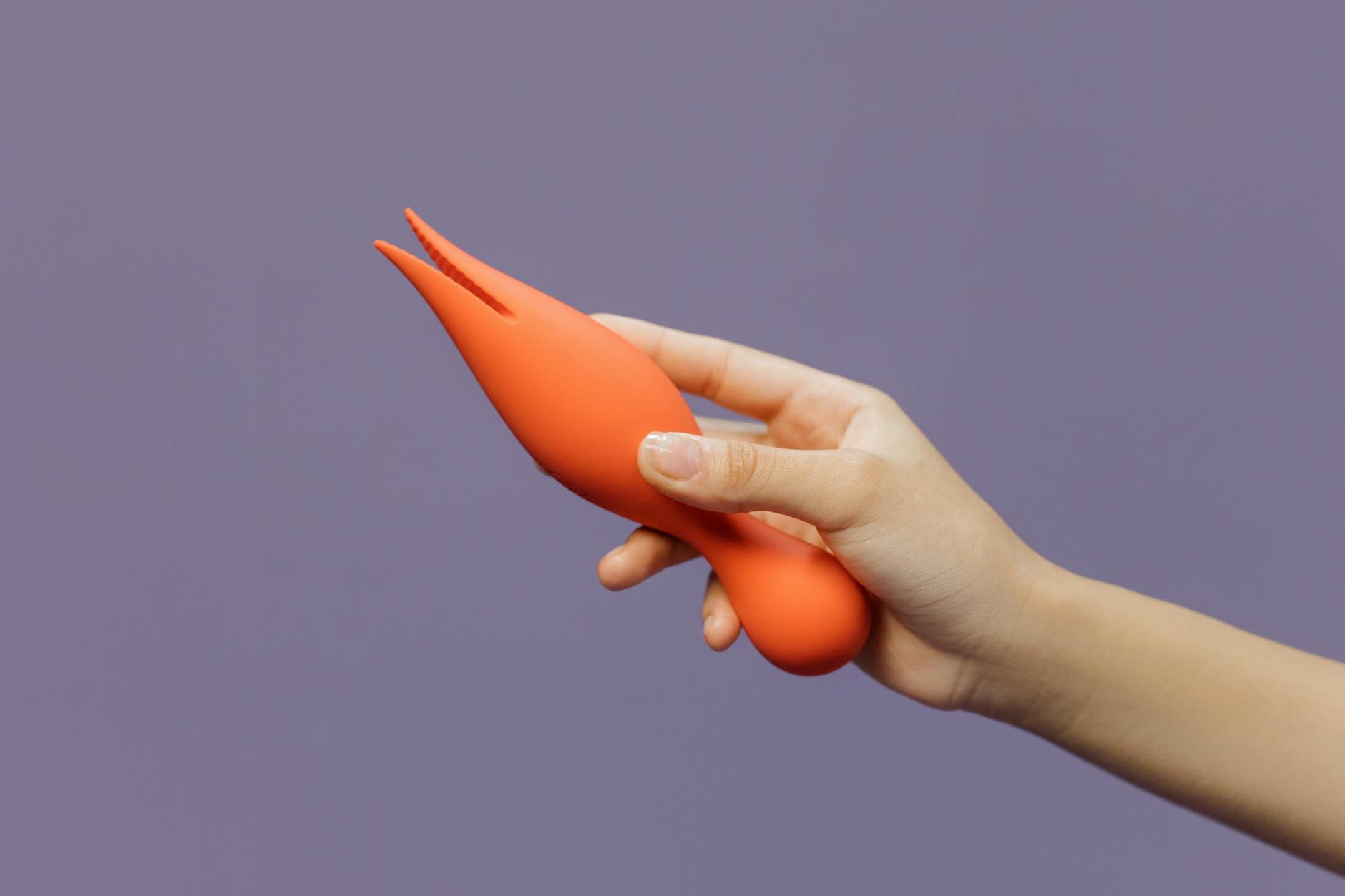
Photo by cottonbro studio on Pexels
The partner's perspective: why hesitation isn't rejection
If you're the hesitant partner reading this, know that your caution is information, not a flaw. You might be protecting against vulnerability. You might have beliefs about what toys "mean" that came from culture, family, or past relationships. You might just need more time.
None of that is wrong. Your comfort matters as much as your partner's curiosity.
What's useful: staying curious about your own resistance instead of shutting it down. "I feel uncomfortable" is data. "I feel uncomfortable because I'm worried he'll find me boring" is useful data that you can actually work with.
And if your partner has how lemon vibrators help when you're nervous about trying toys with a partner anxiety, remember: they're also nervous. You're both strangers to this.
The bigger picture: desire alignment isn't one-size-fits-all
Most couples don't want identical things at identical times. One person is more adventurous. One needs more reassurance. That's not dysfunction. That's just being human.
The skill is learning to negotiate without resentment. "I want this" and "I'm nervous about this" can both be true, and you can build something together that honors both.
Using lemon sexual toys together when you're not starting from the same place requires exactly that. It requires talking, listening, going slow, and meaning it when you say "your comfort matters." That's actually harder than just buying the toy and trying it. It's also what creates real intimacy.
FAQ: Different comfort levels and shared exploration
What if my partner thinks toys are cheating?
That's usually a story about what toys "mean," not about the toy itself. Start there. "I want to understand what feels unfaithful to you about using a toy together." Often it's rooted in the idea that toys replace partnership, which is false. Toys with a partner are the opposite of cheating. They're cooperative. They're about building something together.
How do I bring it up without making my partner feel inadequate?
Lead with desire, not lack. "I want to explore this with you" sounds different than "we need to spice things up." Avoid language like "I'm not satisfied" or "we're boring." Instead: "I'm curious about new sensations. I want to experience them with you."
Is it normal for one of us to move faster than the other?
Completely normal. People have different risk thresholds, different relationship histories, different beliefs about sex. You're not broken if you don't match. You just need communication and patience.
What if we try it and my partner hates it?
Then you stop and you talk. "That didn't feel right for me" is complete information. You don't push. You listen. And you ask: "What would feel better?" Maybe lemon clitoral vibrators aren't the move. Maybe a different approach to shared pleasure works better. That's all useful.
Can we use a toy if we're only doing it occasionally?
Absolutely. You don't need a regular schedule. "Hey, I want to try that thing we talked about" can happen once a year or once a month. Frequency doesn't matter. Consent and communication matter.
My partner is willing but seems uncomfortable during sex. What do I do?
Stop and check in. "I notice you seem quiet. Are you okay?" Don't assume they're having fun because they said yes. Check in during, not after. And absolutely give them permission to say "actually, I don't want to continue right now." That's the whole framework. Yes can become no. That's fine.
The takeaway: alignment is something you build, not something you start with
Most couples don't begin with matching desire around toys. They build it through conversation, patience, and genuine curiosity about each other's hesitations.
Your discomfort or your partner's discomfort isn't a roadblock. It's the actual material you work with to create something real together.
If you're stuck on this, reaching out is the move. Sometimes a little outside perspective makes all the difference.