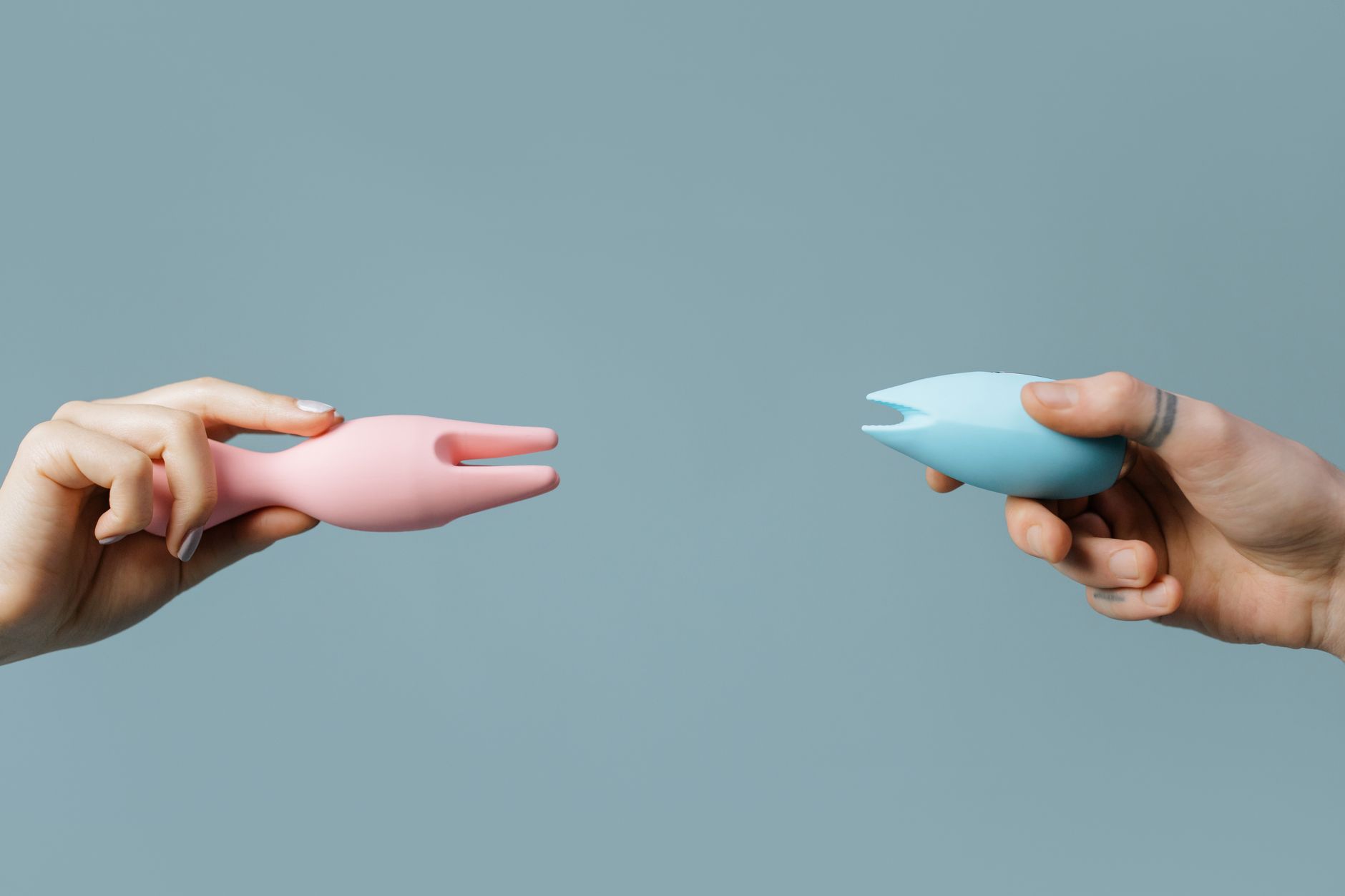
Here's the thing about switching up a 10-year routine
Your body doesn't want to be told it's been doing it wrong. If you've spent a decade getting yourself off the same way—pressure, rhythm, angle, speed—your nervous system has basically wired that path into muscle memory. Introducing a lemon clitoral vibrator isn't about erasing that. It's about adding a completely different signal to your pleasure map.
The resistance you feel isn't laziness or prudishness. It's your body saying, "I know this way works. Why risk it?" That's actually smart. The problem is that sticking with one method for years can create a kind of sensory rut. Not because the method is bad, but because your body adapts to predictability. A lemon clitoral vibrator resets that adaptation.
Here's what changes when you switch, and why it matters.
Why your body resists a new sensation
Your fingers—or whatever you've been using—create friction and direct pressure. You control the speed and pressure completely. A clitoral vibrator works entirely differently. Instead of friction, it uses rapid micro-movements that stimulate nerve endings without requiring the same muscular engagement from you. That shift can feel jarring.
There's also a learning-curve tax. With your old method, you've trained yourself to recognize what "building" feels like, what "almost there" signals feel like, what the edge of an orgasm feels like. A vibrator creates a totally different sensation trajectory. You're basically learning a new language for your own pleasure.
Add in the fact that lemon sexual toys are designed to deliver consistent, intense sensation—which is very different from the micro-adjustments you've probably been making with your hands—and you can see why the first few tries feel off. Your brain is waiting for the sensation pattern it knows. Instead, it's getting something faster, more uniform, more concentrated.
The practical adjustment: starting slow actually works
Here's the setup that transforms the experience for most people: start clothed. Seriously. Don't add the vibrator to your existing routine yet. Instead, hold the lemon vibrator (not turned on) against your clitoris through your underwear. Let your body get used to the shape, the weight, the presence.
Then turn it on at the lowest setting, still clothed, still no immediate pressure to perform. Spend 5-10 minutes just exploring what low intensity feels like. You're not trying to come. You're gathering data.
When you finally move to direct contact, you've already given your nervous system a low-stakes introduction. Your body knows the toy isn't a threat. The sensation isn't a shock.
When to introduce it to your existing routine
Don't replace your old method right away. Use both. That sounds awkward, but it's actually the fastest way to cross the bridge. Spend 15 minutes with your hands doing what they always do. Build arousal, get close. Then, in that last few minutes before you'd normally finish, introduce the lemon vibrator on a medium setting.
This isn't about the vibrator stealing the orgasm from your hands. It's about showing your body that vibration is compatible with the pleasure you already know how to create. You're pairing the new sensation with the success of the old method.
After a few sessions of this, try starting with the vibrator earlier in your session. Maybe at the 10-minute mark instead of the 5-minutes-to-go mark. Your body will gradually learn to trust it as a primary tool, not an accessory.
Why intensity matters more than you think
If you're using a lemon clitoral vibrator and it feels numb or distant, the first instinct is usually to assume you're broken or desensitized. Often, the actual problem is simpler: the intensity isn't right for your body.
Different people have wildly different vibrator sensitivity. Someone who loves low, gentle patterns won't respond to the same settings as someone who needs higher intensity. There's no "correct" setting. But a lot of people start too high, get overstimulated, and bail. Others start too low, feel nothing, and assume the toy isn't for them.
Budget 3-4 sessions just playing with intensity settings with no goal of finishing. You're mapping your body's response to different frequencies. By the fourth session, you'll know whether you're a "turn it to 5 and explore patterns" person or a "start at 8 and go from there" person.
The mental block nobody talks about
After years of solo routine, many people carry a low-level assumption that a toy means something is missing. That assumption is wrong, but it's worth naming. Using a lemon clitoral vibrator doesn't mean your body wasn't good enough at getting itself off. It means you're choosing a different experience.
Honestly, introducing a tool can actually deepen your understanding of your own pleasure because you're forced to pay attention. When you use your hands on autopilot, sometimes you don't really notice what's building. A vibrator demands more presence. You have to actually feel what's happening rather than just executing a familiar motion.
Real talk about switching toys mid-routine
If you've tried lemon vibrators before and they felt weird, here's what might be happening. You probably introduced them too late in your session, with too high intensity, expecting them to work exactly like your hands. All three of those amplify the discomfort.
The other thing: some people's bodies genuinely respond better to certain vibration frequencies than others. That's not a personal failure. It's anatomy. If a lemon sucker or lemon clitoral vibrator isn't your device, there are other options. But don't write off toys based on one awkward session.
Most people need 4-6 sessions before a new toy starts feeling natural. Your brain is literally rewriting its sexual response pathway. That takes time.
When sensation finally clicks
One day—usually around the fourth or fifth session—something shifts. The sensation stops feeling foreign and starts feeling like just another way your body can feel good. The resistance lifts. You'll know it immediately because suddenly you'll stop monitoring the sensation and just experience it.
At that point, you have options. Some people alternate between their old method and the lemon vibrator depending on what they want that day. Others find they prefer vibration now. Some keep both as part of the same session. There's no end goal here. You're just expanding your pleasure toolkit.
FAQ
How long does it actually take to get used to a vibrator?
Most people feel genuinely comfortable with a new lemon clitoral vibrator after 4-6 solo sessions. That's 4-6 times of 15-30 minutes each with zero pressure to finish. Your nervous system needs that repetition to stop treating the vibration as unusual. Some people click faster. Some take longer. Neither is wrong.
Will using a vibrator make my hand method stop working?
No. Your body doesn't forget sensations. You're adding a new pathway, not deleting the old one. Think of it like knowing how to run and how to swim. Doing one doesn't erase your ability to do the other.
What if I try lemon sexual toys and feel completely numb?
That usually means intensity is off (too high or too low), or you're introducing it too late when you're already overstimulated. Back up. Start clothed. Start early in your session. Play with different intensity settings separately from any goal of finishing. Numbness often disappears once your nervous system isn't in override mode.
Is it weird to have a solo routine and also want to use toys?
Not remotely. Solo pleasure and partnered pleasure are different experiences. A clitoral vibrator in your solo time doesn't change anything about partnered sex unless you want it to. Many people keep these completely separate.
What if my partner notices I'm using a vibrator and gets weird about it?
That's a separate conversation from the vibrator itself. If your partner has insecurity about toys, the problem isn't the toy. It's the insecurity. You might explore how to use lemon vibrators with a partner when you have different comfort levels to address it together.
Do I need to use lube with a lemon vibrator?
You don't need to, but many people find it enhances sensation. Water-based lube works best with silicone toys. It reduces any friction that might feel uncomfortable and lets the vibration do the work without drag. Start without and add it later if you want.
The actual shift
Introducing a lemon clitoral vibrator after years of one solo method is less about the toy and more about giving yourself permission to change what feels good. Your pleasure isn't static. It evolves. Sometimes it evolves toward something new, and that's not a failure of your old method. It's just expansion.
If you're stuck in that resistant phase right now, commit to 5 sessions. Clothed, low intensity, no goal. You might surprise yourself. Or you might decide it's not for you, and that's fine too. The point is you'll know from actual experience, not from that first awkward try.
Ready to explore? Start here and let your body teach you what it wants.